
· fake job offers
Fake Job Offers on WhatsApp: 7 Signs Before You Pay a Registration Fee in 2026
15 min read
A real employer never asks you to pay before you start, so any request for a registration, training, or activation fee is your signal to walk away. Keep that one rule in mind, and most fake job offers on WhatsApp become much easier to spot.
You may have seen the message already. A friendly person adds you to a WhatsApp or Telegram group, promises easy income, and says work is waiting for you today. You're looking for work, maybe you're still in school, and the offer feels like good luck at last.
Fake job groups were widely reported as one of the biggest scams in Kenya in 2025, and they were aimed squarely at young people looking for work. The messages are designed to feel normal and hopeful. That's why smart, careful people get caught, and why nobody should feel ashamed if they've already replied or paid.
This guide walks through fake job offers on WhatsApp, 7 signs before you pay a registration fee, with a simple check for each sign. You don't need special skills to run these checks. You need a few minutes, a pause, and a second opinion from someone you trust.
Table of Contents
- 1. 1. You Are Asked to Pay Before You Start
- 2. 2. There Is No Real Interview, Only Chat
- 3. 3. Pressure and Deadlines
- 4. 4. Pay That Is Too Good for the Work
- 5. 5. Contact Only Through Personal Numbers, No Official Email or Website
- 6. 6. Generic Messages With Spelling Mistakes
- 7. 7. Claims to Be a Government Body or Large Company You Cannot Verify
- 7 Signs of Fake WhatsApp Job Offers: Comparison Guide
- How to Check an Offer and What to Do If You Already Paid
1. 1. You Are Asked to Pay Before You Start
The fee is the whole point of the scam. Everything else, the friendly tone, the job title, the deadline, exists to get you to one M-PESA prompt.
Real hiring sends money in one direction only: toward the person doing the work. When an offer asks that flow to reverse, for registration, a form, or a training slot, you stop being an applicant. You become the customer, and the job is the product being sold to you.
Why a Small Fee Is Still a Big Warning
Scammers keep the amount low on purpose. Across thousands of hopeful applicants, it adds up to a serious payday for the person running the scam.
The pause you already use before sending school fees works here too. Our parent guide to paying school fees with M-PESA shows how checking the payee's name and purpose takes under a minute. Give any job offer the same minute.
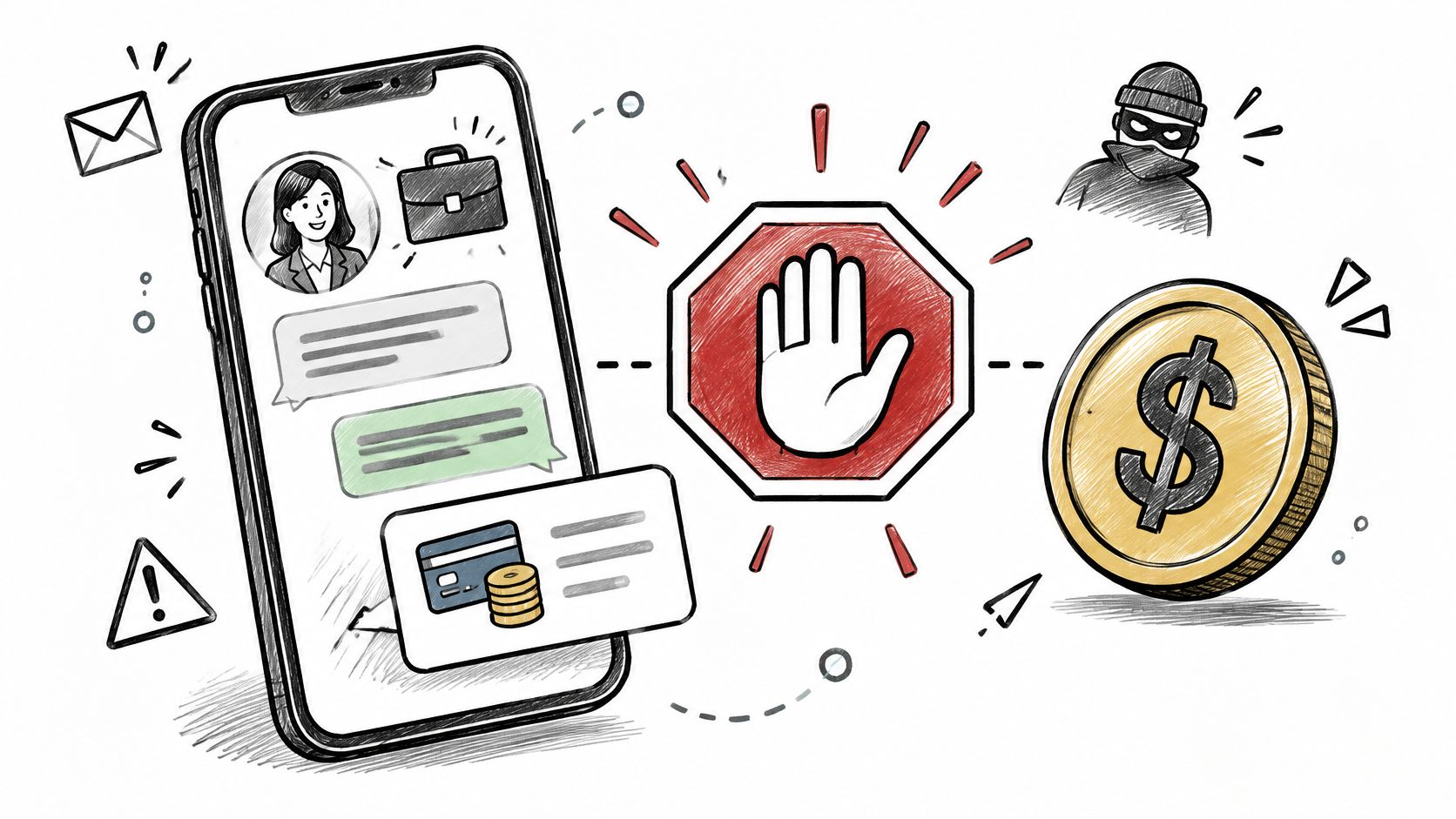
Practical rule: If you must pay to be considered, you're not being hired. You're being sold a story.
Here is your check for this sign. Ask yourself why a real employer would need money from you before any work exists. If the only answer benefits the person asking, stop replying and keep your money. If you want to rehearse this moment safely, the guided practice exercises on Keybaki Labs let you feel the same pressure without risking a shilling.
2. 2. There Is No Real Interview, Only Chat
Think about how a real shop, school, or office hires someone. They want to know who you are, what you can do, and whether you're right for the work. That usually means an application, a call, or a proper interview with real questions.
Fake offers skip almost all of that. You answer two or three chat messages, and suddenly you're hired. Nobody asks about your experience, nobody explains who you'd report to, and the conversation moves quickly to payment.
What a Missing Interview Tells You
A Kenya-focused 2023 study of 73 participants documented 89 scam incidents and found job offers among the most common scam types, alongside M-PESA impersonation, according to the University of Washington financial grift study. Employment messages are a repeat trick, not a rare accident, so a rushed chat-only process deserves real caution.
Look closely at the conversation you're having. Does the person avoid a phone or video call? Do they ignore questions about duties, hours, or the work address, and only repeat that you must pay to start?

Try this simple test before you go further:
Ask for a call: Request a phone or video interview and watch whether they agree or dodge it.
Ask specific questions: Ask about daily duties, working hours, and who your supervisor would be.
Ask who the employer is: Ask for the registered name and physical location, then check it yourself.
A genuine recruiter can answer these calmly. A scammer usually rushes you past them, because detail is where the story falls apart.
3. 3. Pressure and Deadlines
"Pay in the next hour or lose your slot." "Only three places left." "This offer closes tonight." If the message makes your heart race, that's not an accident. Urgency is the tool scammers use to stop you from thinking.
When you're rushed, you don't check the organisation. You don't ask a parent, teacher, or older sibling. You just pay, hoping you won't miss out, and that's exactly what the deadline is for.
Real Deadlines Work Differently
Kenya Ports Authority has warned about counterfeit job letters, said it charges no fee at any stage of recruitment, and listed urgency and WhatsApp-only communication among the warning signs, in reporting of the Kenya Ports Authority fraud warning. Real employers may have closing dates, but they don't punish you for taking a day to verify an offer.
Watch the tone in this screenshot-style example many learners describe. The admin sends a final reminder, says your registration will be cancelled within the hour, and tells you not to discuss it with anyone yet.

If someone wants you to keep a job offer secret from people who care about you, treat that secrecy itself as a warning.
Your check here is simple. Pause before you click or pay, and give yourself at least a day. Show the messages to a trusted adult or teacher and read them together, slowly. If the offer can't survive one day of checking, it was never a real offer.
4. 4. Pay That Is Too Good for the Work
Easy work should not pay like a skilled full-time job. Liking videos, typing short captions, or commenting on posts takes little training and little responsibility. When someone promises generous daily income for tasks like these, ask where that money would come from.
The high pay is the hook. It makes the fee feel small and sensible, because you believe you'll earn it back in a day. Scammers count on that quick calculation.
How the Numbers Are Used Against You
In 2025 WhatsApp and Telegram job groups, fake testimonials claimed earnings of about KES 1,500 to KES 6,000 per day, while the first activation or registration request was commonly KES 150 to KES 1,000 through M-PESA, as described in Eastleigh Voice reporting on Kenyan cybercrime in 2025. After paying, many people were blocked, removed, or asked to pay again for task upgrades.
Notice the trap inside those figures. The promised income looks large beside the first fee, so paying feels low risk. Then the second request arrives, perhaps to access tasks or withdraw earnings, and you're chasing money you've already lost.
Run these checks before you believe any pay promise:
Compare the pay: Look at what similar real jobs pay through official channels.
Ask how payment works: Ask exactly how, when, and by whom you'd be paid.
Watch for deposits: Refuse any job where you must put money in to earn money or withdraw money.
Real pay matches real work. If the work is tiny and the pay is huge, the product being sold is probably you.
5. 5. Contact Only Through Personal Numbers, No Official Email or Website
A real organisation leaves footprints you can find without help. It has an official website, an email address on its own domain, and accounts you can reach from that website. You can check the employer without asking the recruiter for permission.
Fake recruiters often give you almost nothing to check. There's a personal mobile number, a WhatsApp photo that could be anyone, and maybe a Telegram username. When you ask for an official email, you get a free personal account instead.
Why Impersonation Is So Common
The Communications Authority of Kenya reported that 54.8% of online-harm cases received by the National KE-CIRT/CC in Q1 2023/24 involved impersonation, and it named WhatsApp among the platforms used for online harms, as summarised in the Communications Authority consumer complaints and fraud report. A copied name and logo are easy to make, which is why independent contact details matter so much.
Protecting your personal details is part of the same habit, and our explanation of the Kenya Data Protection Act shows why you shouldn't hand ID copies to unverified people.
Do the lookup yourself, every time. Type the organisation's name into your browser, open its official website, and use the contact details published there. Never use the link, number, or email from the chat to prove the chat is genuine, because that's asking the message to vouch for itself.
6. 6. Generic Messages With Spelling Mistakes
"Dear candidate, you are selected." The message doesn't use your name. It doesn't name the employer clearly, the company name may be misspelled, and the job could be anywhere, doing anything. Messages like this are often sent to many people at once.
One spelling mistake doesn't prove a scam, and good people make typing errors every day. The danger is the combination. A vague, rushed message that also asks for money should slow you right down.
Big Groups Do Not Prove a Job Is Real
Logos, likes, and busy groups can all be manufactured.
That is a digital literacy skill worth practising early, much like the checking habits in our guide to digital literacy skills. You're not judging someone's English. You're judging whether the message gives you anything specific you can verify.
Try searching the exact job title and organisation name together with the word scam. Check whether the message names you, the role, and the next step clearly. Be extra careful with forwarded offers from groups you never joined, because forwarding strips away the original sender and makes checking harder.
7. 7. Claims to Be a Government Body or Large Company You Cannot Verify
Some messages borrow authority. They claim to come from a government body, a parastatal, or a big company everyone knows. They may copy a logo, use official sounding language, or call the fee an official processing charge.
A famous name should make checking easier, not unnecessary. Large organisations publish vacancies in places you can find yourself. If the only path to the job runs through one person's WhatsApp number, that path is the problem.
What the Public Service Commission Has Said
On 3 May 2025, Kenya's Public Service Commission warned that fake job advertisements were circulating on WhatsApp, said fraudsters were posing as its staff, and stated that PSC recruitment is free, transparent, and merit-based, as reported in The Star coverage of the PSC WhatsApp warning. It advised applicants to verify vacancies through publicservice.go.ke or its official social media platforms.
A safer habit is a company-first approach to job hunting, where you start from the organisation and its official careers page, then work backwards to any message you've received.
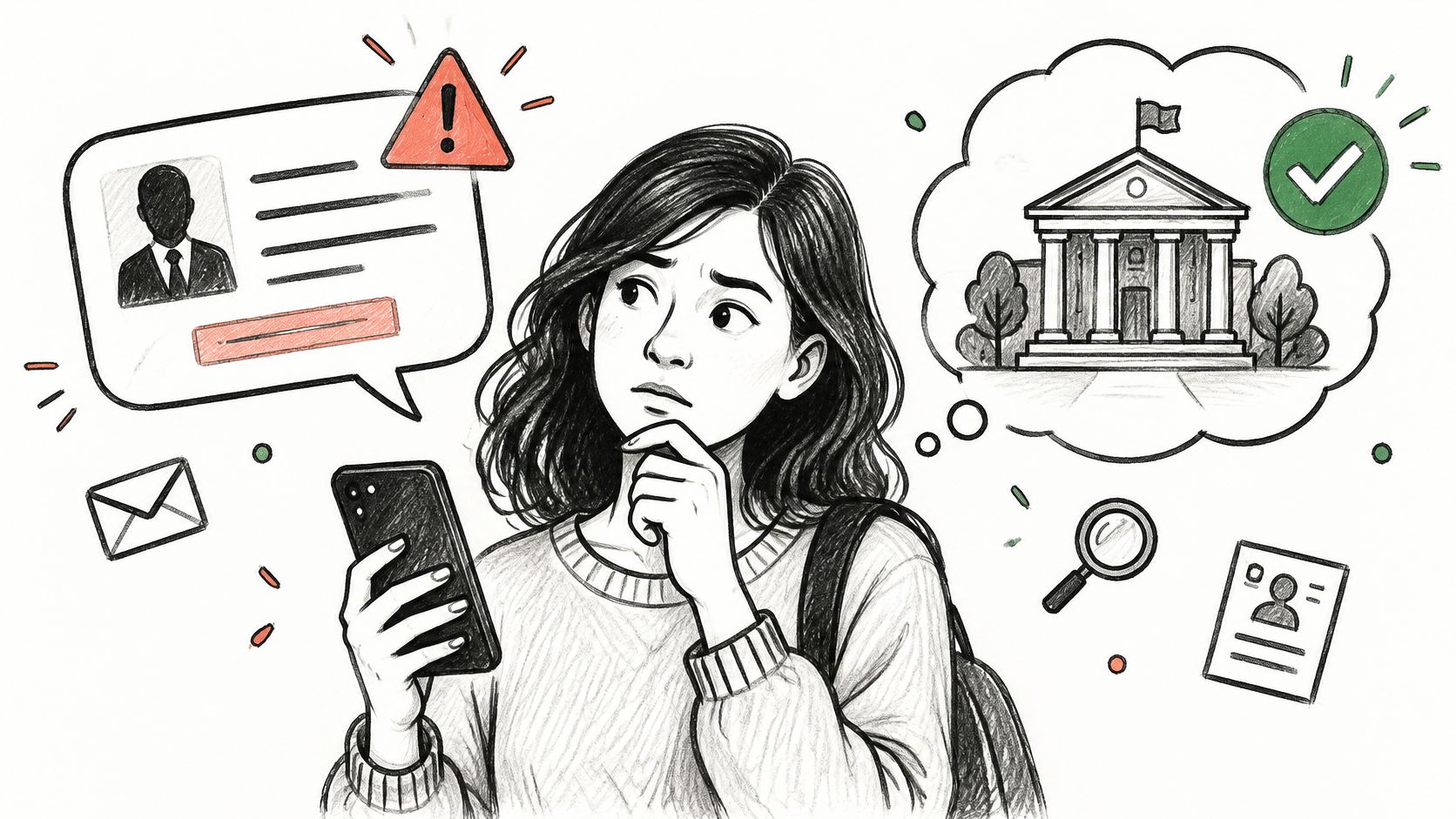
Type the official web address yourself rather than tapping a link from the chat. If the vacancy isn't on the official website or official social accounts, treat the message as unverified. Remember that PSC recruitment is free, so any payment request in its name should be treated as a scam, reported to the organisation being copied and to the police, and shared as a warning with friends.
7 Signs of Fake WhatsApp Job Offers: Comparison Guide
| Warning Sign | Typical Indicators | Verification Complexity | Resources Required | Expected Outcome | Most Useful When |
|---|---|---|---|---|---|
| Pay Before Starting | Registration, training, or activation fee requested before work | Low | No payment; ask the employer to explain the fee | Quickly exposes a common job-scam tactic | Any recruiter asks for money before hiring |
| No Real Interview | Chat-only hiring, generic questions, immediate offer, no role details | Low | Phone or video call; questions about duties and reporting | Helps assess whether the employer is genuinely evaluating candidates | The offer arrives after only a few messages |
| Pressure and Deadlines | “Limited slots,” urgent payment demands, secrecy, threats of losing the offer | Low | Time to pause and advice from someone trusted | Reduces rushed decisions and creates time to verify | A recruiter insists you act immediately |
| Unrealistic Pay | High earnings for simple tasks, vague duties, deposits required to earn or withdraw | Moderate | Comparison with similar roles; clear pay and payment terms | Helps identify implausible compensation or pay-to-work schemes | Pay seems unusually generous for the effort |
| Unverified Contact Details | Personal number only, no official email or website, mismatched domains | Moderate | Independent search for official channels | Helps confirm whether the recruiter and organisation are verifiable | Contact is limited to WhatsApp, Telegram, or a personal email |
| Generic Messages and Errors | Vague greeting, spelling mistakes, unclear role, forwarded message | Low | Careful reading; search for the role and employer | Reveals inconsistencies that warrant further checks | The message lacks specific job or employer details |
| Unverifiable Government or Company Claims | Official-sounding name, copied logo, “processing” fees, suspicious links | Moderate | Organisation's official website or verified social accounts | Confirms whether the vacancy and recruiter are authentic | An offer claims to represent a government body or major company |
How to Check an Offer and What to Do If You Already Paid
Checking an offer works like checking a stranger at your gate. You do not ask the stranger who sent them; you ask someone you already trust. Before any payment, run the same short routine every time. Look up the organisation on its official website or official social accounts, using an address you find yourself rather than a link from the chat. Refuse to send money to a personal M-Pesa number, and read the recipient name on the confirmation screen if you are ever unsure. Then ask a trusted adult or teacher to read the offer with you, because a second pair of eyes often spots what hope and pressure hide.
WhatsApp itself is not the verdict. A real recruiter can send a WhatsApp reminder, and a polished letter can still be fake. The key question is whether the employer's identity, the vacancy, the contact channel, and the payment demand can each be confirmed independently.
If you have already paid, please do not blame yourself.
Stop there, and do not pay more, even if someone promises a refund, clearance, or release of your salary for one more fee. Keep screenshots of the full chat, the phone numbers used, any offer letter, the recipient name, and your M-Pesa transaction code. Report what happened to the organisation being impersonated and to the police, and warn friends who may be in the same groups. In a 2025 overseas jobs case, Kenya's government reported 84 cases and about KSh17 million in losses, and directed victims to submit documents through the NSSF Building in Nairobi or use a toll-free number outside Nairobi, as reported in The Star coverage of the 84 job scam cases. Clear records help, even when recovery is not guaranteed, and they can protect the next person.
The safest place to build this skill is somewhere mistakes cost nothing. Keybaki Labs, as noted earlier, offers guided practice where learners work through safe simulations of the same tricks scammers use in real chats. Try one session, talk it through with a parent, teacher, or friend, and hold on to the one rule from this guide: a real employer never asks for money before you start.
Keybaki Labs helps learners, parents, and teachers build calm checking habits through guided practice. If a WhatsApp job message lands in your family group tonight, practise the pause first, run the seven checks together, and visit Keybaki to keep learning with support you can trust.
Comments
Loading…